

May Peels (2026)
no-knead dough, but i dream of ratatouille; radical DIYs; herby, hot, sour and green; slugs and books

hi, and welcome to The Onion Papers. Peels are a writer’s almanac featuring bread, soil, reading, kitchen and sky updates, and are published on the first Monday of each month. i’m so happy you’re here.

Dear nosy readers, it’s a happy time finding you here after a month living here and there, making quick-paced decisions while living in short-term accommodations, finding no respite in talking about the state of the world but focusing on what there is to notice before my eyes, at hand’s reach. Scribble them down so they may be noticed again, preserved, not remembered once they will be gone—missed. May smelt of wild garlic, May was green in the fields and along the river but pink and orange in the gardens. Strawberry flowers but no wild strawberries yet. Watch out! Bumblebees are crossing the same path on which you walk, searching for a partner to reproduce; mergansers are paddling down the river Kelvin. Two nests in Queen’s park and many more ducklings. Now look up at the pine trees: pretty, purple fingertips. A rainbow, May was loving and its night’s sky deep, sleepy blue, its mornings bright and early. We danced a ceilidh at a wedding and more friends got married over a picnic in the park. Mango and chocolate ice-cream stored in fridge bags, a stranger’s house was covered with helium balloons for someone’s seventieth birthday; I stripped out my kitchen on a Monday and a crow dropped a cork at my feet as I ran past it on a Friday. A dead crow in Linn Park the following Monday morning; unpicked litter everywhere, picnic season’s haters but six Yorkshire terrier dogs in a pram. And there is this spot on the wobbly bridge: if you stand there right on time, around 8:00 am these days, the sun says ciao as it slides between the large tree and the church, the shadow of its hand brushing off your face. And, then, if you are lucky enough, a few pacey bouncy runners will join you, and you will be rocked, cuddled and sunkissed, tucked in for a hopeful day ahead. An unopened tin of baked beans sitting on top of a dustbin. Hostas hostas hostas, and slugs. My neighbour A. said to elevate the pots, so I re-arranged the garden; good thinking, there is no hide like being covered in soil. Sunflowers were a delusion but marjoram, chives, santoreggia and fennel are growing into confident Glaswegians, so is the wee fig tree. The jury is still out on the nepitella case since, on the day we had voted green, an immediate and lashing rain fell upon my neighbourhood, the water piercing through my three layers of clothing, my skin soaked and my handwritten sheets and books wet inside my backpack, the ink weeping. I have casted a vote and am writing this iteration of the Onion Peels on the morning after the first heatwave of the year, blessed with a singing breeze, the laburnum tree in the Kelvingrove Park dancing in golden yellow gently. Once upon a time, my summers had begun in France, with a concert outside of a town or city hall for the fête de la musique on June 20th, but it was May 2026 just now and, for the time being, a short forget-me-not playlist in praise of the beautiful house covered in wisteria I nodded at every morning while walking Leopoldo from a new-temporary neighbourhood:


brief, writing news
I remain committed to ludicrously long titles for short stories and my story, The Story of a Day in a Town Where the Priest Chose to Strike, is now available in print in Extra Teeth Issue 11. You can order a copy here to support a brilliant literary magazine, or grab a bundle via their newsletter Extra Teeth Magazine.
bread update
I have been mixing cement powder and water instead of flour, so minimal kneading for May. Small dough balls, rolling pitta breads for friends to accompany a tagine is my love language. I rely on Sami Tamimi’s recipe from Falastin, a cookbook co-written with Tara Wigley, for those. As for the loaves, they are still in rye and they are rising malty and nutty, as follows:
3:27pm: 70g rye starter, 80g water and 80g rye flour to prepare the levain, combine, cover and leave aside in a warm place;
7:13pm: mix 150g rye flour, 100 eight cereals flour, 90g of seeds (sunflower, nigella, caraway, pumpkin and hazelnuts), 330ml non-alcoholic malt drink, 100ml water and levain to prepare the bread mixture;
cover with a towel and prove overnight;
6:28am: stir in 120g of rye flour and 130g of spelt wholemeal, and leave aside;
8:02am: pour the bread mixture inside a well-oiled loaf tin and set aside; preheat the oven to 200C and bake for 40-45 minutes, or until baked through (cover the loaf at about 20 minutes through the process to avoid the top from burning)


reading, listening
I listened to Artists Siblings Visionaries by Judith Mackrell, a family biography about the ‘lives and loves of Gwen and Augustus John’, two Welsh artists and siblings of the 19th Century, that reads like a novel about love and betrayal. If bohemian (and serial adulterer) Augustus enjoyed recognition for his work during his living, reserved Gwen (whose freedom she sought inside enclosed rooms, reading, drawing and painting, and sleeping with French sculptor Rodin) was framed as a woman working in the shadow of famous men. Yet, both Gwen and John lived subverted lives and subdued palettes. As one retrieves in their bedroom to read Balzac and paint, Mackrell’s eye for the details that matter is astute but doesn’t tire.
Peat stores the past and announces the future. It is a buried jungle. It has a long memory. It is the body of Scotland. I was reminded of as much by Kapka Kassabova in Borrowed Land, a multi-layered, urgent book about our vanishing connection to the land, explored through the history of the Highlands and more specifically the portrait of glen of Strathglass. Kassabova, who has lived there for over a decade, talks to her neighbours to dress a portrait of their battle to preserve their culture and biodiversity against the exploitation of the land’s generous resources by corporations such as wind farms. If you love this planet, then I warn you this isn’t an easy book as it challenges the idealisation of renewable energies as a solution or, at the least, Kassabova invites us to consider the cost of the so-called “energy transition”. Borrowed Land is the work of an archivist, recording what has and may be lost, and a reminder that there isn’t a straightforward route out of the environmental chaos humans have created: we must face difficult conversations.
Then, under the spell of Vilanelle, ‘whose talent is to look at everything at least twice,’ I returned to fiction for The Passion by Jeanette Winterson. Henri is a soldier fighting for Napoleon but Napoleon has a passion for chicken, until Henri follows red-haired, webbed-footed Villanelle, the daughter of a boatman whose father has gambled her heart, to the canals of Venice. It is hypnotic. And I treasured the mindscape it offered me. Talking about the dragging war, Henri says that home ‘stopped being a place where the fire goes out,’ but it became ‘the focus of joy and sense.’ Then:
‘There was no alternative to this war.
And the heaviest lie? That we could go home and pick up where we had left off. That our hearts would be waiting behind the door with the dog.’
Still thinking about “home” and its landscapes, I spent a day with Samantha Harvey’s Orbital. In the International Space Station, a team of meteorological astronauts observe the planet, spinning from oceans to deserts, mountainous regions, circling the blue planet and its seasons sixteen times. Set in an enclosed place but facing the whole world, Orbital is a beautiful novel about what life on earth means and asks whether there is life without earth or earth without life. Earth’s twenty-four-hour orbits become a leitmotif for this beautiful meditation about the fragility of our ecosystems, and I welcomed that narrative structure as a kind hug, swept in.
Back in my headphones, Elliot Page asserted how humanity has always used most of their combined energy to support those who are unkind. Pageboy is a heartfelt memoir about navigating criticism and coercive abuse from some of the most powerful people in Hollywood, family, and a traditionalist society that forces us into a binary. Page writes beautifully about how space amplifies discomfort, and it is good to feel seen indeed.
‘Telepathy, then: the inner monologues of all the so-called teeming millions, of masses and classes alike, jostled for space within my head. In the beginning, when I was content to be an audience – before I began to act – there was a language problem. The voices babbled in everything from Malayalam to Naga dialects, from the purity of Luck now Urdu to the Southern slurrings of Tamil. I understood only a fraction of the things being said within the walls of my skull. Only later, when I began to probe, did I learn that below the surface of transmissions – the front-of-mind stuff which is what I’d originally been picking up – language faded away, and was replaced by universally intelligible thought-forms which far transcended words.’ — Midnight’s Children, Salman Rushdie
And I lost myself in the magical realism of Saleem Sinai, who was born at the exact moment when India became an independent country, and is the narrator of Salman Rushdie’s Midnight’s Children. It is a dense, engrossing novel like there are few, fewer nowadays perhaps, a multi-layered novel that encompasses tragedy and comedy, in which surrealistic occurrences inform present realities, a fantastic allegory.
in the kitchen
plenty of pretty, aromatic fixes! A dollop of rose water before baking the granola as I am afraid there simply would never be a granola that hits all your sweet spots until you make your own mixture. Some things can’t be bought, but I kept coins in my pockets all month long so I could grab a handful of fresh almonds at the deli on my walks. Rhubarb, rocket, radishes, sorrel – sour treats! Mint for the ravioli filling. Mashed peas on toast (with a teaspoon of green harissa), topped with quartered strawberries and a sprinkle of za’aatar.
Fennel seeds, fennel stalks, fennel for the asparagus tart and fennel for the salad and fennel for the giant couscous. Forget about the cocktail: fennel and prawn carpaccio or fennel and beetroot carpaccio.


Then, now, if you too are cooking every night in a different kitchen with few ingredients and utensils available, a few tips: one tablespoon of bouillon with a splash of boiled water will thicken a dish, bringing spices, courgettes, leek, broad beans and hake together in a choir; if there is one pot only, don’t bother, it’s a minestrone situation (and you only need a fork to mash the cannellini beans into a thick paste, so make it creamy oki?); now this one comes from a new friend I met at the wedding, who said to cook the gram flour before adding it to their delicious vegan, gluten free cookies mixture; and, at the risk of becoming specific, if you buy red kidney beans by mistake (instead of tinned tomato sauce), and you’re staying somewhere with one hob, it’s a good night for preserving the tinned water, mix it with the said-bouillon and add any vegetables you can find, a dollop of tomato puree if you were prepared enough, and hop, a chilli con anything-in-the-fridge.
At last, for the day when quietness will return to the kitchen, ratatouille is the most excellent dish to simmer at this time of the year. Here is my recipe, in full disagreement with Mamie Paulette, who turned ninety years old recently and still firmly denies that she has ever taught me to cook a ratatouille comme ça. So, this one is for Paulette:
2 aubergines
3 courgettes
2 peppers
1 (large) sweet white onion
5 tomatoes
3 garlic cloves
thyme
1 bay leaf
First, prepare the tomatoes by peeling them. I boil them for about a minute, depending on how rough and big they are (with their bottom crisscrossed), then pass them under cold water (and rarely bother making an ice bath). Seed and cut the skinned tomatoes roughly. Set aside.
Slice the aubergines and the courgettes, playing around with thickness and shapes, pleasing yourself. Paulette would argue that a courgette must be cubbed; up to you. Set aside.
Slice the peppers thinly and lengthwise. Set aside.
Cut the onion thinly, then pour a generous amount of oil in a heavy-duty casserole and turn the heat up. At the first sizzling noise, reduce the heat and golden the onions gently. Add the peppers after a few minutes.
Once the onions and peppers are tender, add the tomatoes, garlic cloves, one sprig of thyme and the bay leaf. Season with salt and pepper to taste, cover and leave to simmer for approximately 45 minutes over a low heat.
Meanwhile, in a separate pan, cook the aubergines and the courgettes with some olive oil. You should cook them well and separately (but you can use the same pan in batches).
Return to the main casserole. Add the courgettes, aubergines, and more thyme into the tomatoey mixture, along with a splash of hot water. Cover the pan and let the ratatouille simmer on a low heat until it will reach the texture of your choice. I like mine mushy, so that’s about 45 minutes. Sporadically remove the lid and give it a gentle stir but with kindness (which is the secret ingredient) to avoid breaking the vegetables. You can also splash more hot water if the mixture dries out faster than the ingredients are cooking.
You could eat your ratatouille warm as a side dish, but I prefer mine the next day, served cold for lunch.
from The Onion Papers
On May 13th 1978, Law 180 was enacted in the Italian Mental Health Act. In May 2026, I read about Alda Merini’s boiled eggs, returned to Marguerite Duras’ kitchen, and I cooked eggs of my own, and I wrote about Kitchen Aphorisms as drifty, sensual verities.
Kitchen Aphorisms

For anything beyond this sentence to make sense, you must know that the hour was opportune. At that time in the afternoon, the sun lands on the left upper end of the kitchen counter, above the sink where the terrarium sits. It is yellow and crowded with small cacti, punctuated with purple, pink and yellow flowers, white spines like brittle nails pluckin…
looking ahead (Glasgow GMT)
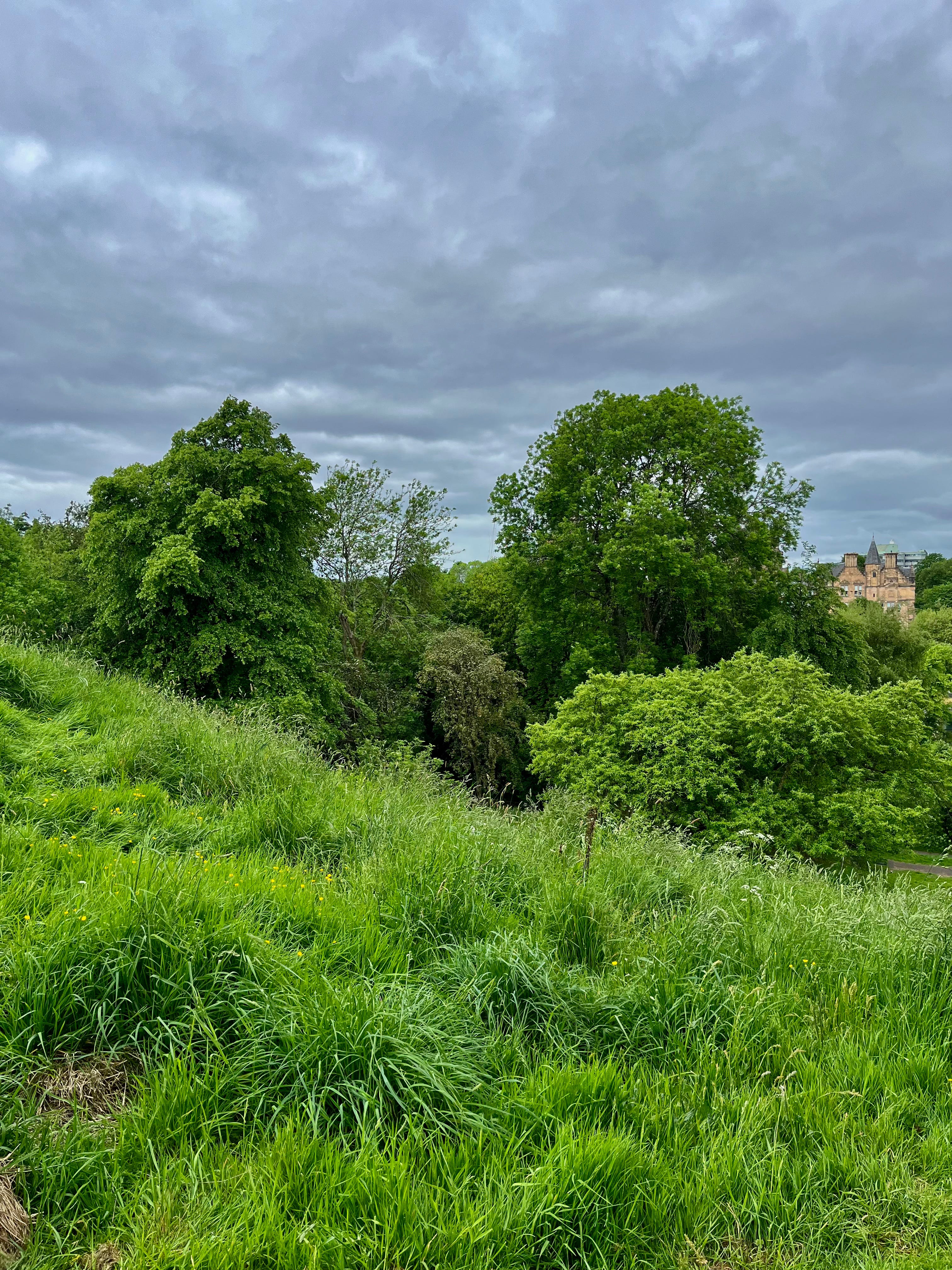
The tree in front of the window needs pruning, so do the sage and the lettuce in the garden. The days are stretching longer, sun-kissed picnics by the river eating raw food straight from their packaging – cucumber and hummus, egg mayonnaise, radishes and raspberries, a piece of cheese on a cracker, spitting crimson cherry pits down the grassy hill, killing time all the way to the longest day of the year. Midnight dinners, for which only a freezer may be of rescue. A fish ragù, fastened with plenty of tomato purée, a tablespoon of dashi and an extra teaspoon of bottarga. Parsley, paprika, garlic and one peperoncino for the battuto. Squid and hake, or else fish from the freezer, one tin of tomato sauce, the mixture left to simmer for as long as it takes to bring water to the boil and to cook the pasta of your choice. This shouldn’t take long but shan’t be less bright.
[This is an extract from the June entry of Letters to Another Kitchen, a collaborative zine I published with illustrator Reena Makwana and of which you can get a copy at my shop here.]
Merci for being here month after month.
margaux
thank you for reading The Onion Papers. i’m margaux, a writer adrift, and this is my hybrid newsletter. if you enjoy my work, remember to subscribe and/or invite friends to the party as you keep me going. read more about TOP here.
PS. I write novels too.